Overview
The ball python is the gentle introvert of the snake world: shy, slow, and so disinclined to bite that its defence is to roll into a tight ball and hide its head in the middle. That temperament, a manageable 3–5 foot size, and an almost absurd variety of colour morphs have made it the most popular pet snake on the planet. Its quirks are equally famous — seasonal hunger strikes that panic new owners, and a strict need for warmth and humidity that punishes guesswork.
Temperament & personality
A ball python's day is mostly hiding; its evening is a slow, deliberate patrol. Individuals are placid and handleable, rarely striking, and quickly learn the routines of their keeper. They are also champion worriers: new enclosures, wrong temperatures, or an exposed glass tank can put one off food entirely. Keepers who provide tight hides, cover, and consistency get a calm, confident snake; those who don't get a fasting, hiding one.
Appearance
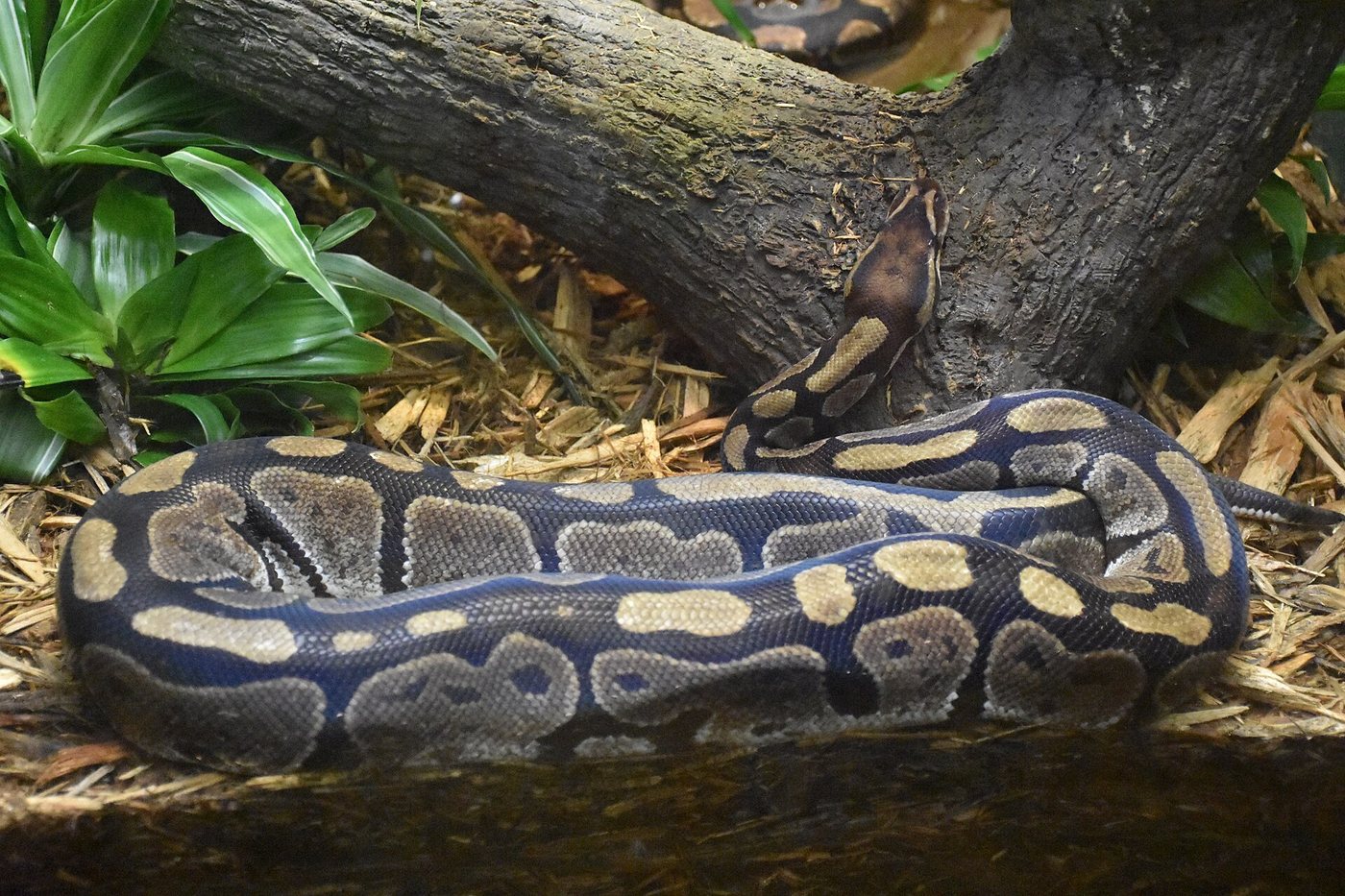
A heavy-bodied, smooth-scaled python with glossy brown, tan, and black blotched patterning that breaks up its outline perfectly in leaf litter — which is precisely the point. The head is distinctively marked with a dark stripe through each eye. Decades of selective breeding have produced thousands of 'morphs' — albino, pied (white patches), pastel, banana, and endless combinations — making the ball python the most genetically varied pet snake in the world. Wild-type animals remain beautiful and are often the hardiest.
Care & daily life
Ball pythons fail to thrive in fish tanks with screen lids and heat lamps drying the air — humidity is the battle. Aim for 50–60% humidity (rising to 65–70% during sheds), a warm side of 88–92°F, a cool side of 76–80°F, at least two tight hides (one each end), and a water bowl big enough to soak in. A front-opening PVC or similar enclosure holds heat and humidity far better than glass. Feed frozen-thawed rodents — never live, which can injure the snake — roughly every 1–2 weeks for adults and weekly for juveniles, with prey about as wide as the snake's thickest point. Expect hunger strikes; a healthy adult can fast for months without harm.
Health & lifespan
The Ball Python is generally known for the following health watch-points:
- Respiratory infections — wheezing, mucus, and open-mouth breathing, usually from cool or damp conditions
- Stuck shed and retained eye caps from low humidity
- Snake mites — tiny black parasites that spread between collections and cause soaking and misery
- Scale rot from sitting on wet, dirty substrate
- Inclusion body disease (IBD), a serious viral illness of pythons and boas — quarantine new animals
- Obesity in overfed pets and mouth rot (stomatitis) also occur
Living with a Ball Python
Ball pythons suit calm households and patient owners who enjoy a beautiful, slow, largely nocturnal animal and are not rattled by a pet that sometimes refuses dinner for a season. The real commitments are the 4-foot enclosure, the humidity discipline, a freezer corner for rodents, and a lifespan of two to three decades. They are not the snake for someone who wants to handle a snake daily or feed it on a rigid schedule.
History
Ball pythons — called royal pythons in Britain, from the (probably mythical) story that Cleopatra wore them — come from the grasslands and open forests of West and Central Africa, where they shelter in termite mounds and mammal burrows. They were imported in huge numbers from Ghana and Togo for the pet trade; today, most pets are captive-bred, and the species has become the centre of snake keeping's morph industry, with individual designer animals historically selling for tens of thousands of dollars.