Overview
Ask experienced keepers for the best first snake and most will say the corn snake before you've finished the question. Native to the American Southeast, this slender rat snake combines everything a beginner needs: a gentle temperament, an enthusiastic appetite (a genuine rarity among pet snakes), tolerance of normal household conditions, and a size that impresses without intimidating. Add hundreds of colour morphs and you have the hobby's friendliest ambassador.
Temperament & personality
Corn snakes are the extroverts of the snake shelf — curious, active at dawn and dusk, and inclined to explore their enclosures and their keeper's hands rather than hide all day. Youngsters can be flighty and quick, but nearly all settle into calm, confident adults that tolerate handling gracefully. They are watchable snakes, forever rearranging themselves on branches and investigating anything new, which makes them far more entertaining than their placid cousins.
Appearance
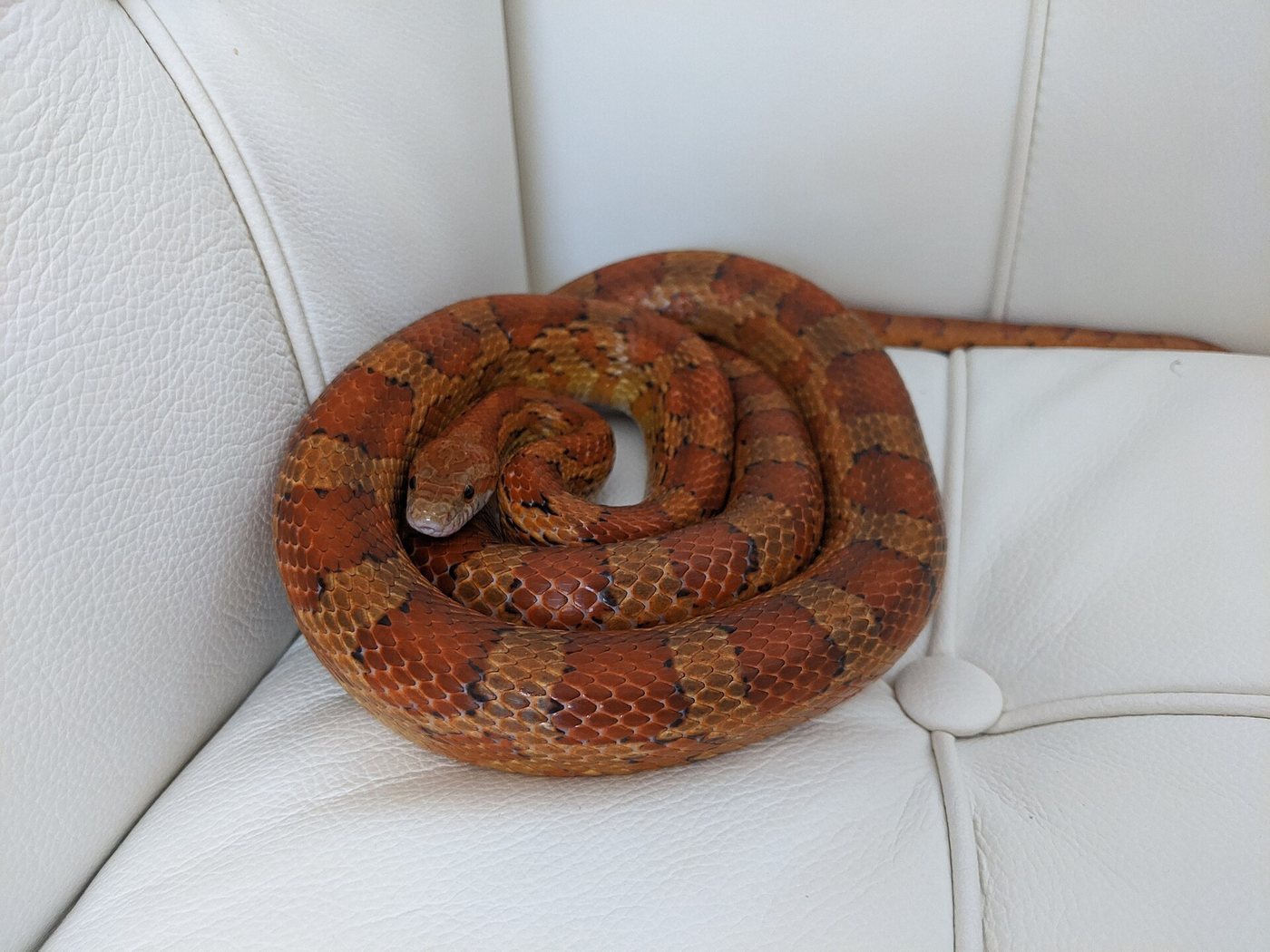
A slender, graceful colubrid with a ground colour of orange, red, grey, or brown marked with darker blotches along the back and a distinctive spearpoint pattern on the head; the belly carries a checkerboard of black and white that flashes when the snake flips defensively. Corn snakes are the undisputed champions of snake colour genetics: amelanistic (red albino), anerythristic, snow, tessera, palmetto (nearly pure white with flecks) and hundreds of other morphs are all the same species wearing different paint.
Care & daily life
Corn snakes are the most forgiving snakes in the hobby, but the fundamentals still apply: a warm spot of 85–88°F, a cool side in the mid-70s, humidity around 40–50% (higher, or a humid hide, during sheds), two or more hides, a water bowl, and climbing branches — corns are semi-arboreal and use vertical space happily. Security is the one non-negotiable: corn snakes are legendary escape artists that can squeeze through gaps you'd swear were too small, so a locking lid or door is essential. Feed frozen-thawed mice — pinkies for hatchlings up to adult mice for grown snakes — once every 7–14 days depending on age, and skip handling for about 48 hours after meals.
Health & lifespan
The Corn Snake is generally known for the following health watch-points:
- Respiratory infections from cool, damp enclosures
- Mouth rot (infectious stomatitis) — red, inflamed gums are the early sign
- Snake mites, easily imported on new animals or supplies
- Regurgitation, usually from handling too soon after feeding, oversized prey, or low temperatures
- Egg binding in breeding females
- Burns from unregulated heat sources — always use a thermostat
Living with a Corn Snake
Corn snakes suit almost anyone: families, beginners, schools, and keepers with limited space who still want an active, personable snake. Expect a 4-foot enclosure, a small freezer stash of mice, weekly-ish chores, and 15–20 years of a snake that will watch you from its branch with apparent interest. Less suited to owners who travel constantly without a snake-sitter, though healthy adults tolerate a missed week better than most pets.
History
Corn snakes are rat snakes of the southeastern US coastal plain, named — depending on which story you prefer — for the maize-like checkerboard on their bellies or for their habit of hunting rats around corn cribs and barns, where farmers valued them. Easy to breed and naturally variable, they were among the first snakes bred systematically for colour traits, starting with the amelanistic morph found in the 1950s; today the hobby counts corn snake morphs in the hundreds.