Overview
The leopard gecko might be the perfect small pet lizard: quiet, clean, slow-moving, hardy, and genuinely tolerant of gentle handling, with a face that seems to smile thanks to its rare movable eyelids. It stores fat in its tail like a camel stores it in a hump, hunts insects at dusk, and can live as long as a cat. Most pet leopard geckos are captive-bred in an astonishing range of colours, which keeps prices low and genetics interesting.
Temperament & personality
Evening is showtime: leopard geckos spend the day asleep in a hide and emerge at dusk to patrol, hunt, and lick at everything (they explore by taste). Individuals range from shy to genuinely tame — most settle with regular, gentle handling and will walk hand-to-hand calmly. They are solitary animals; despite pet-shop tanks full of juveniles, adults should be housed alone, as males fight and even females may bully a tankmate.
Appearance
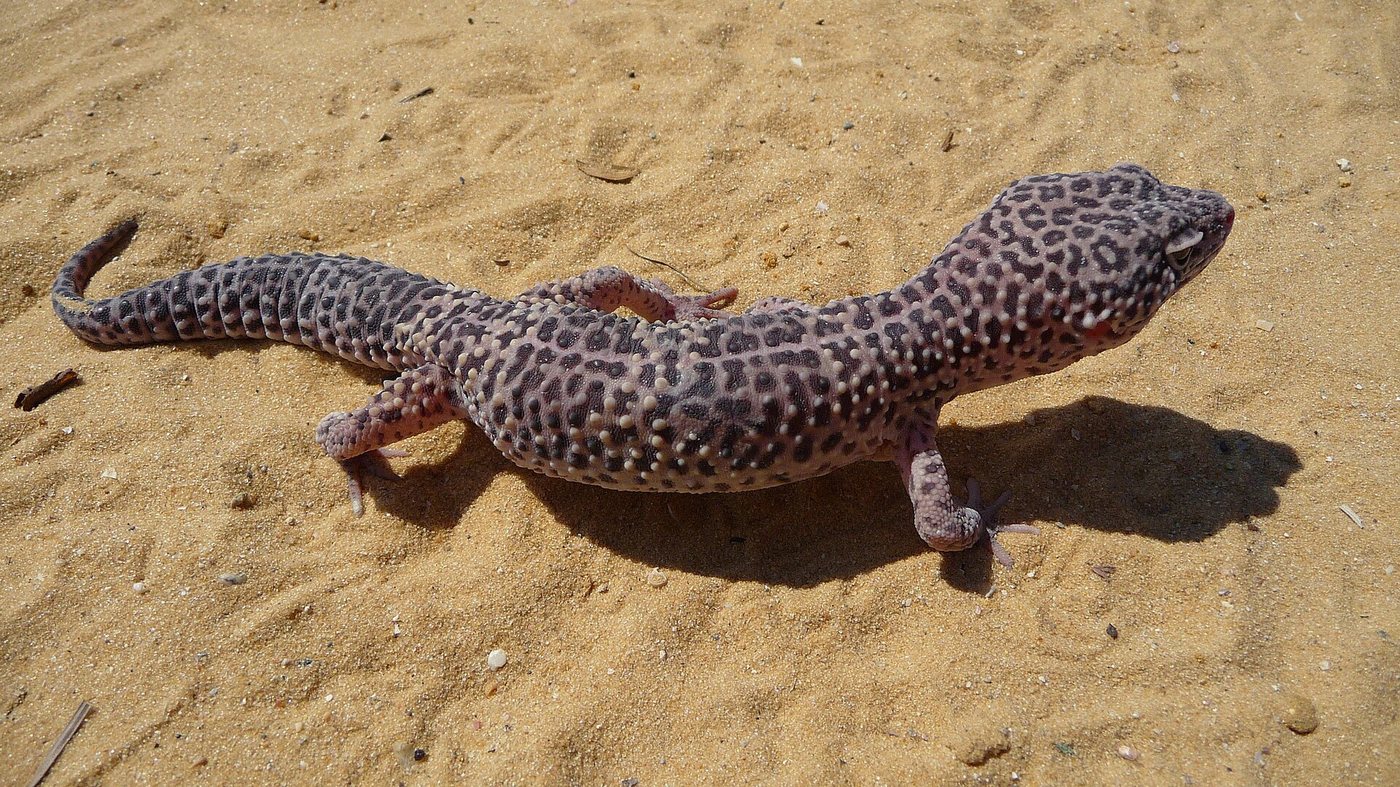
A small, sturdy gecko with soft, bumpy skin covered in fine tubercles, a fat-storing tail, and — unusually for geckos — movable eyelids, which give it an almost smiling expression. The wild type is yellow with dark spots, like its namesake, but breeders have produced dozens of morphs: high yellow, albino strains (Tremper, Bell, Rainwater), patternless, blizzard (pure white), and vivid tangerine lines. Adults have a gentle, slightly squishy build quite unlike the sleek, sticky-toed climbing geckos.
Care & daily life
Leopard geckos are ground-dwellers that need floor space, warmth from below or a properly controlled overhead source, and three hides: warm, cool, and humid (the humid hide, lined with damp paper towel or moss, is where shedding happens). Keep the warm side at 88–90°F and the cool side in the low-to-mid 70s. Modern care increasingly recommends a low-level UVB light even for this nocturnal species. Feed live insects — crickets, dubia or discoid roaches, mealworms, black soldier fly larvae — dusted with calcium and vitamin D3 at most feedings, in the evening when the gecko is active. A shallow water dish and a small dish of plain calcium complete the basics.
Health & lifespan
The Leopard Gecko is generally known for the following health watch-points:
- Metabolic bone disease from inadequate calcium or D3 — rubbery jaw and bowed legs are warning signs
- Stuck shed (dysecdysis) — retained skin on toes can cut off circulation and cost toes; usually a humidity problem
- Impaction from ingested substrate or oversized prey, worsened by low temperatures
- Parasites — including Cryptosporidium ('stick tail disease'), a serious, contagious wasting condition in leopard geckos
- Egg binding in breeding females and mouth rot (infectious stomatitis) also occur
Living with a Leopard Gecko
Leopard geckos suit patient owners, older children, and anyone in a smaller home — they are quiet, nearly odourless, nocturnal, and content in a 3-foot enclosure. The commitment is longevity more than labour: feeding every few days, simple cleaning, and potentially two decades of companionship. They are a poor fit for someone who wants an animal active at midday or one that can be passed around a roomful of children repeatedly.
History
Leopard geckos come from the rocky, arid grasslands of Afghanistan, Pakistan, and northwest India, sheltering in burrows by day and hunting insects at dusk. They entered the Western pet trade in the 1970s–80s and breed so readily in captivity that virtually every pet-shop leopard gecko today is captive-bred. Breeder Ron Tremper and others turned the species into a morph phenomenon from the 1990s onward, with designer colour lines now numbering in the dozens.